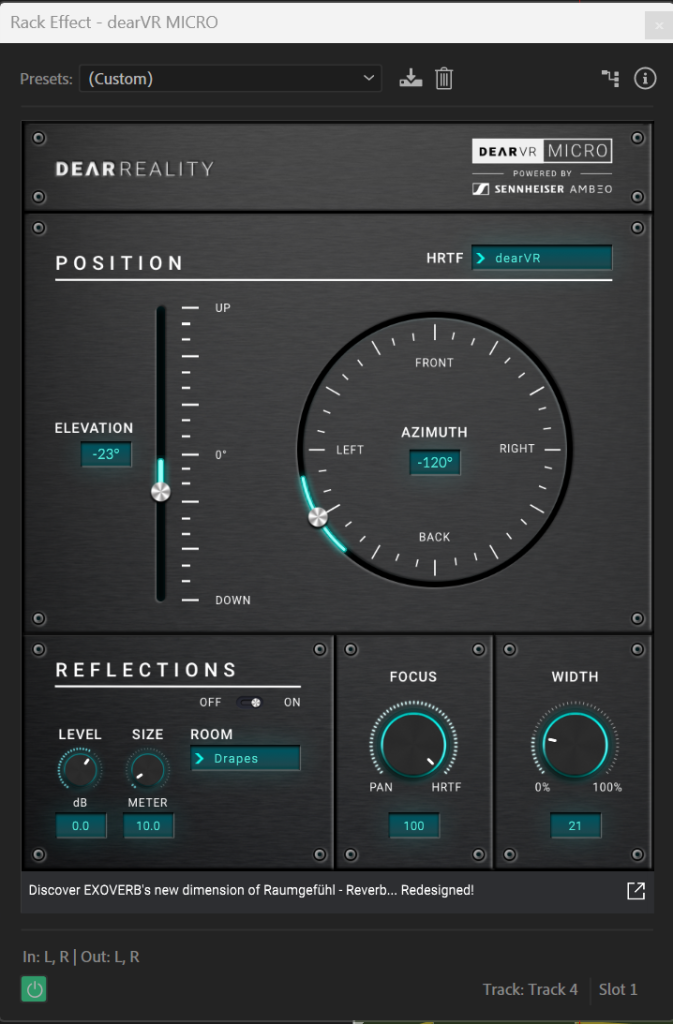
The audio is designed to work using 2:1 directional sound to ensure the audio placement in the scene is correct. The audio channels were configured using the Dear VR plugin for Audition. Unfortunately, as this is a pre rendered video and not played in real time using a game engine such as Unreal or Unity, it isn’t possible to use First Order Ambisonics with real time head tracking. This is technology I would like to explore at a later date to gain a wider understanding of sound engineering.
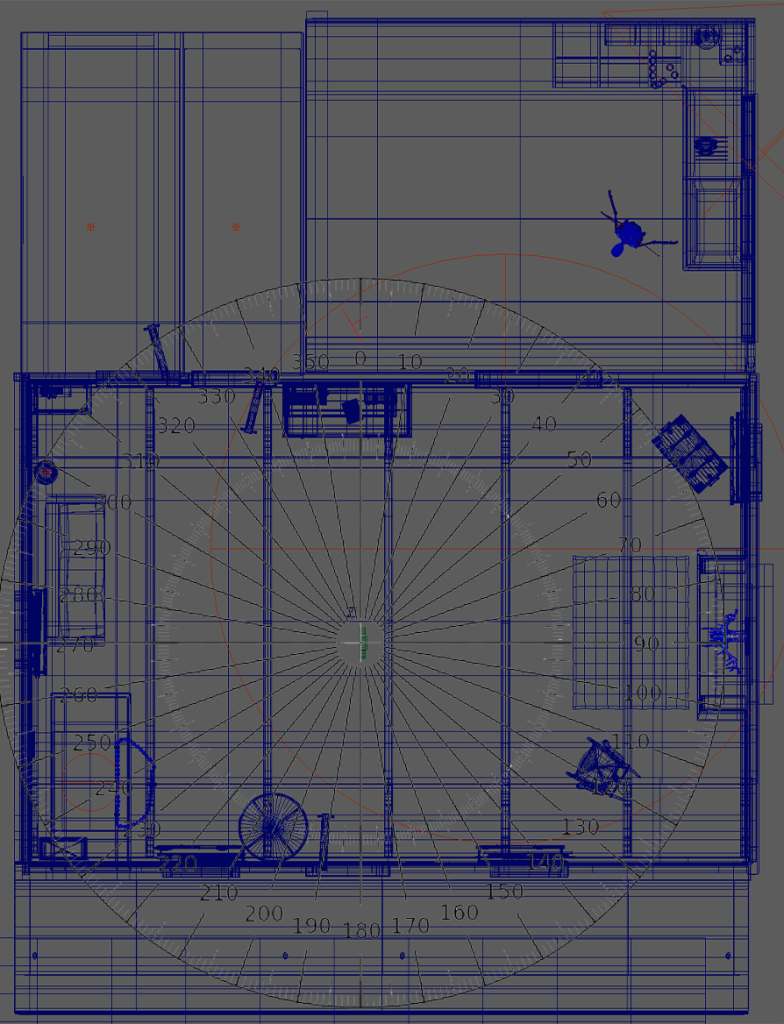
To work out the correct positioning for audio placement, I took a screenshot from the top perspective view to gain an understanding of where the items were placed in the scene for the X and Z positioning. Using this screenshot, I overlaid an image of a protractor to get the sound origin point angles for keying in Dear VR. “Remember the only two senses we use when watching a film is sight and sound” (Visual Tone, 2020)
Secondary to this, a test render in VR was required to gain an approximate height for some objects as they have different elevations such as the thunderclaps, the deer head and the cellar door chains. It was important to drive the experience forward with the sound design to guide the user and increase the sense of paranoia for the audience that something could always be behind them. This forces them to switch angles constantly and emulates the scene where the room mocks Ash in the film.
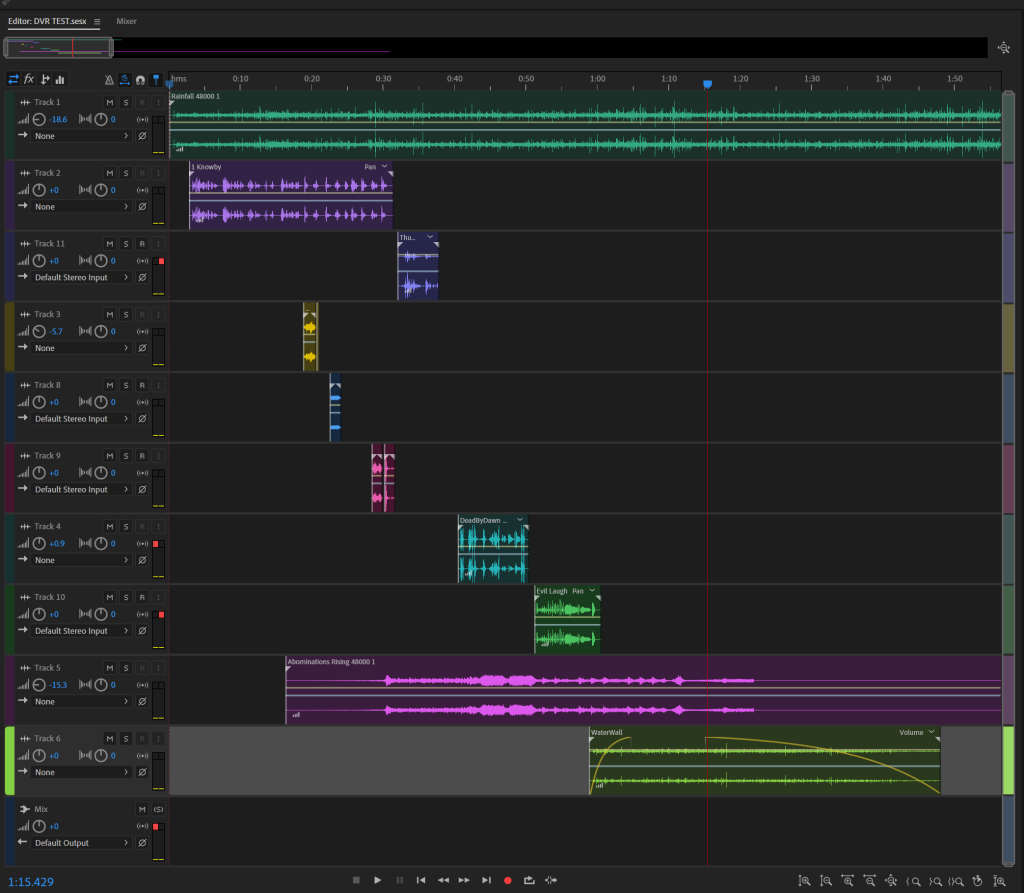
To record some of the sounds, I did some foley work of my own, such as rubbing a chain against a wooden chair. By taking these loose samples and slightly pitching them down, this worked really well in the scene. The sounds generated from this approach also provided strong “clicking” sounds for the doors locking at the start of the animation. The sounds for the blood rising were developed as I took the sound of a wine bottle emptying into a plastic bowl and reversed the audio, similar to the sounds of the blood pumping from the walls in ED2.
Voiceover
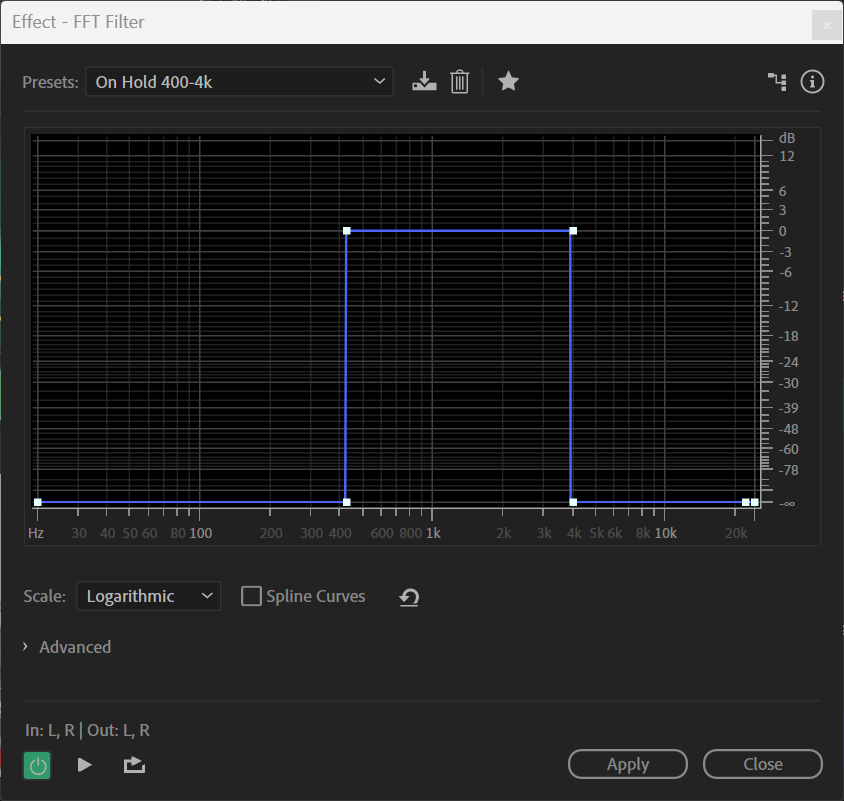
To create the opening narration that kick starts the events of the animation, I condensed some of the script from Evil Dead 2 and recorded it myself, applying a vocal pre-set (On hold 400-4k) in Audition that made it sound as if the voice over was coming through an old phone, which was fitting given the usage of an old reel to reel tape recorder. This provides both diegetic sound and helps to aid the immersion. This limits the frequency range between 400 and 4000 Hz, which renders the audio both “noisy” and flat.
There are a number of sounds I was unable to create and I relied heavily on the BBC sound effects library for them. The full list of found assets are available at the end of the series of blog posts with full accreditation provided.
I used the track “Abominations Rising” from the 2013 Evil Dead reboot as the main theme. Upon hearing this theme, it helped to influence the direction of the piece. The score creeps in and using piercing strings, pushes a sense of danger onto the audience. It felt perfect for this animation.
Exporting
The final export for the audio was