In this section of research, this post will examine the changing attitudes towards female representation in advertising and investigate several prominent advertising/branding campaigns with a focus on women in advertising.
Representation in the media (and the lack thereof)
Research was conducted in 2019 by The Geena Davis Institute on work submitted to Cannes Lions to understand the advertising landscape of the time and examine the perceptions offered by the advertising industry and how people were represented. This research was conducted in English speaking parts of the world, which presents some limitations, but the overall aim of my brand development is aimed at a western audience so this is not a major drawback.
As part of their executive summary, six key areas were examined for representational points. This data set compared 251 English speaking (or subtitled) advertisements to 2,270 advertisements from between 2006 to 2018 to measure how the advertising industry had accepted a wider range of “characters” (Geena Davis Institute, 2020).
These following areas were the main concerns of this investigation:
- Gender
- Race/Ethnicity
- LGBTQ+
- Disability
- Age
- Body Size
The most pertinent findings in this report, for this blog post, examined gender and who is represented on screen. As could be expected, men where typically shown more frequently than women (at almost a 2:1 ratio) and have roughly twice as many speaking roles and screen time. Women were also found to be more likely to be shown as overtly sexual, such as wearing revealing clothing, at a four times higher rate than men and almost twice as likely to be shown as partly nude. (Geena Davis Institute , 2020)
In keeping with these findings, it is important to examine how several brands have adapted towards representation in advertising, in line with changing societal expectations.
Dove – Real Beauty & Subsequent campaigns (2004 – Now)
In 2004, Dove (a Unilever brand) created a marketing campaign developed to examine how “(1) beauty is a challenging topic for women, and (2) women are challenging stereotypical views and standards of beauty. At Dove, we believe – and the findings of this study reinforce – that a cultural shift can take place” (Unilever, 2004). This initial campaign used more realistic depictions of women in their marketing efforts in response to troubling research suggesting 75% of participants wished that “the media did a better job portraying women of diverse physical attractiveness – shape, and size.” (Unilever, 2004).
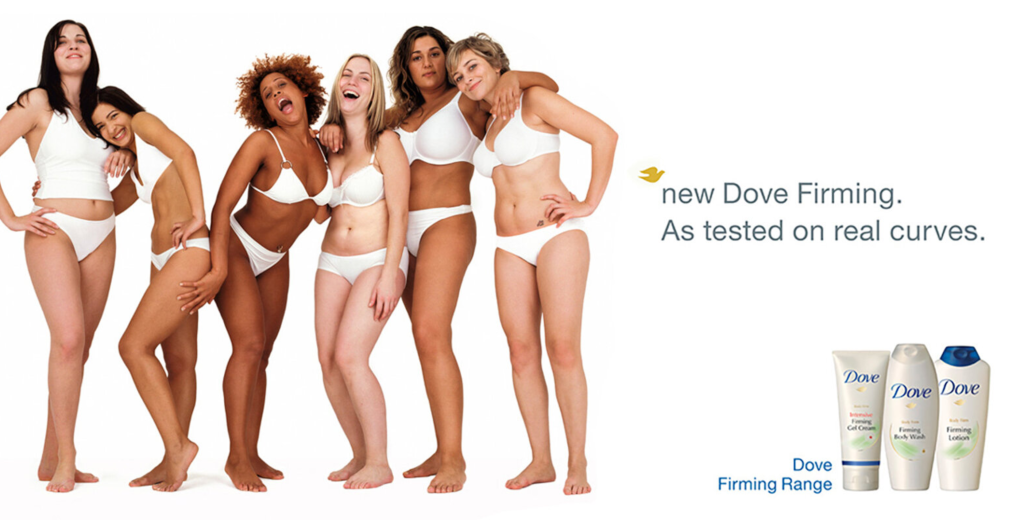
The crux of one of these campaigns highlighted how women’s perception of the ideal body type was influenced by lighting, makeup and computer manipulation of models to sell products.
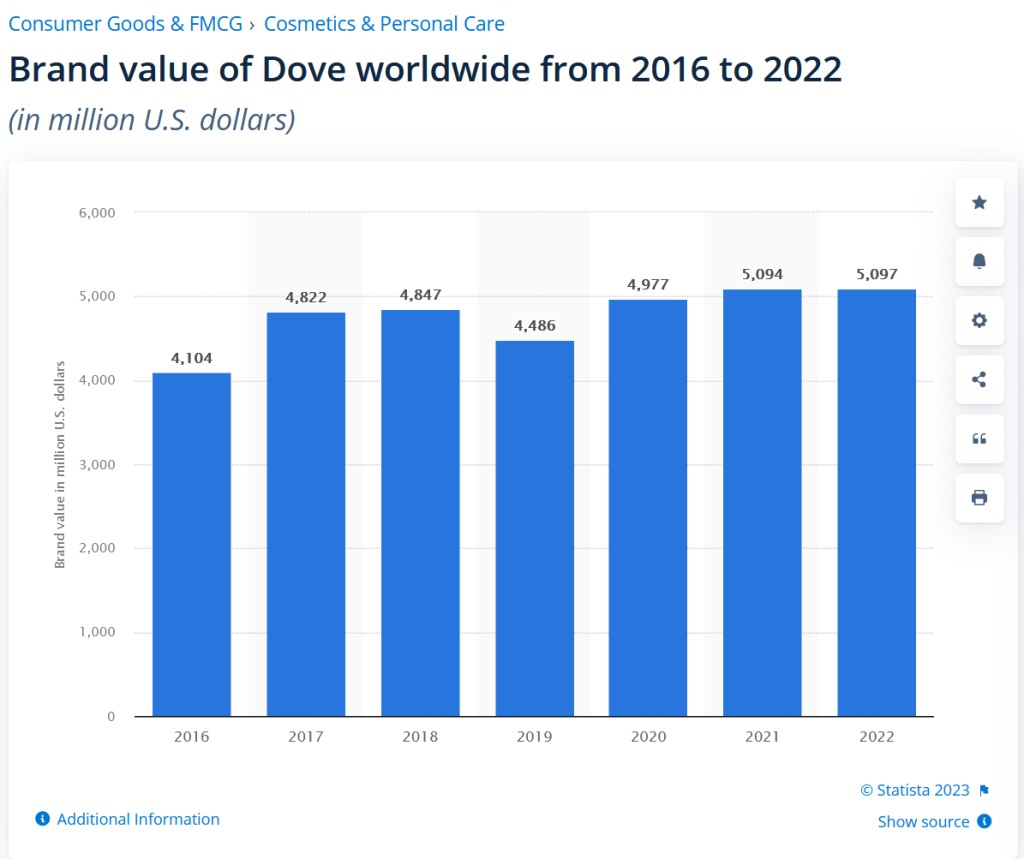
Currently, Unilever have promised to “portray women as they are in real life” and to use “zero digital distortion of women” in their marketing of Dove products in keeping with the philosophy started almost twenty years ago (Unilever, 2017). This tactic of updating this core message and brand identity has helped to ensure that Dove are one of the most dominant brands in the world with an estimated current market value of 5.1 billion US dollars (Statista, 2022).
Nike – Better for It & other campaigns (2015 – Now)
Nike is one of the largest brands in the fitness industry and has consistently aligned itself on pressing social issues of the time. In 2015, Nike paired with advertising and marketing agency Wieden + Kennedy to create the “Better for it” media campaign.
This campaign focused primarily on regular women in a variety of fitness scenarios with audio verbalising their mentality as they struggle through “easy” exercises in an attempt to empathise with an audience who would otherwise not purchase their products.
The fundamental message offered was “Nike’s “Better For It” campaign. It invited a global community of women to push themselves further. Whether it was a personal best in their latest marathon or a weekend run, #betterforit offered athletes collective inspiration to reach new heights and a place to share their experiences.” (Wieden + Kennedy, 2016)
Building on the success of this campaign, Nike have integrated more female empowering marketing into their brand strategy, as this proved to create discourse online, generating many op-ed pieces and effectively free advertising. For example, Katy Cowen wrote an article for Creativeboom.com discussing the impact of the “Never Settle, Never Done” marketing campaign based around women’s football and its rising prominence in the general sporting landscape. “Nike’s latest spot comes at a time when there is a high watermark for women’s football, the highest so far. But there is much left to do, hence the campaign’s overriding message, ‘Never Settle, Never Done’.” (Cowan, 2022)
So why is this research relevant?
This blog post has explored how dominant brands within their space have effectively used changing attitudes towards female representation to aid in the sale of their products. It is no longer enough for a brand to get by on just the products that they sell. Much like the energy drinks explored in the first section of these blog posts, they are selling an idea, not the product.
This research will help to develop the identity of my brand and product line as I will try and incorporate a social message into the core identity of the brand that is female focused. It is clear from the research conducted on energy drinks that there is a demand from women for these products, and taking inspiration from companies such as Dove and Nike should enable the brand to have a strong set of core values that help to meet this need whilst also ensuring that the brand supports a message that people can get behind.
References
Cowan, K., 2022. Never Settle, Never Done: Nike’s campaign for women’s football is a rallying cry for equality. [Online]
Available at: https://www.creativeboom.com/inspiration/never-settle-never-done/
[Accessed 01 03 2023].
Geena Davis Institute , 2020. Bias & inclusion in advertising: An analysis of 2019 Cannes Lions work., Mount Saint Marys University: Geena Davis Institue on gender in media.
NIKE, 2022. Never settle, never done. [Online]
Available at: https://www.youtube.com/watch?v=PZIqV7wNyyU
[Accessed 01 03 2023].
Robinson, D., 2023. Dove – Campaign for real beauty. [Online]
Available at: https://www.daverobinsondesign.com/work-1/dove-campaign-for-real-beauty
[Accessed 01 03 2023].
Statista, 2022. Brand value of Dove worldwide from 2016 to 2022. [Online]
Available at: https://www.statista.com/statistics/1010915/dove-brand-value-worldwide/
[Accessed 27 02 2023].
Unilever, 2004. The Dove Report : Challenging Beauty, New York: Edelman.
Unilever, 2017. Announcing the Dove Real Beauty Pledge. [Online]
Available at: https://www.unilever.com/news/news-search/2017/announcing-the-dove-real-beauty-pledge/
[Accessed 27 02 2023].
Wieden + Kennedy, 2016. Nike : Better for it. [Online]
Available at: https://www.wk.com/work/nike-better-for-it/
[Accessed 01 03 2023].
Youtube, 2015. Nike Women – Better For It – Inner Thoughts. [Online]
Available at: https://www.youtube.com/watch?v=WF_HqZrrx0c
[Accessed 01 03 2023].