In a study from 2019 it is argued that the core demographic for energy drink consumption is predominantly males aged between 25-34 (with an upward trend in female consumption between 16 to 44 years old at 38%). When observing behaviours of 18- to 24-year-olds, regardless of gender, over half at 51% consume them (Clapp, et al., 2019). This data indicates that the energy drink industry is focused primarily on targeting younger people.
Advertising in the space
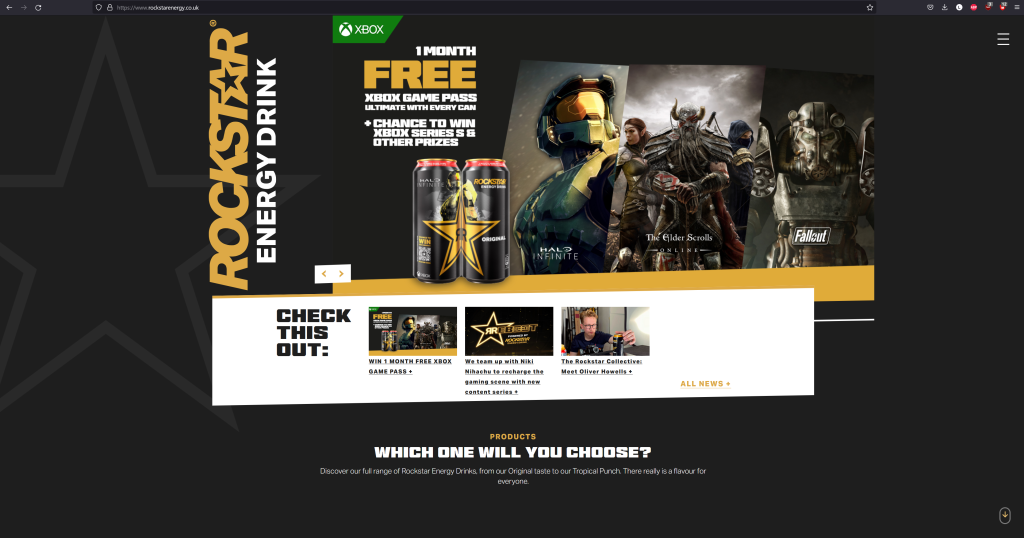
This is reflected in the advertising methods that some of the brands under examination use. Rockstar energy frequently collaborates with video game companies to cross promote their brands as seen below with a current (as of 06/12/2022) advertising deal with Xbox. The core demographic for video game players in the United Kingdom, according to Statista, is 16–24-year-olds, which parallels the core demographic the energy drink industry targets.
Potential intervention from the government
In response to the potential harm energy drinks pose, the Department of Health and Social Care on behalf of The United Kingdom Government suggested a limit to the sales of energy drink products to anyone below the age of 16 (Department of Health and Social Care, 2018). In response to this, many supermarket chains voluntarily enacted this potential policy pre-emptively. However, as of November 2022 this proposal has not been made mandatory, but it would be in the best interest of my potential brand to adhere to this and market the product accordingly in line with the British Soft Drinks Association (BDSA) voluntary code of practice. They suggest limiting the scope of advertisements, so they do not directly target those below Sixteen years of age and away from spaces they are commonly associated with (British Soft Drinks Association, 2018).
Risks of the product
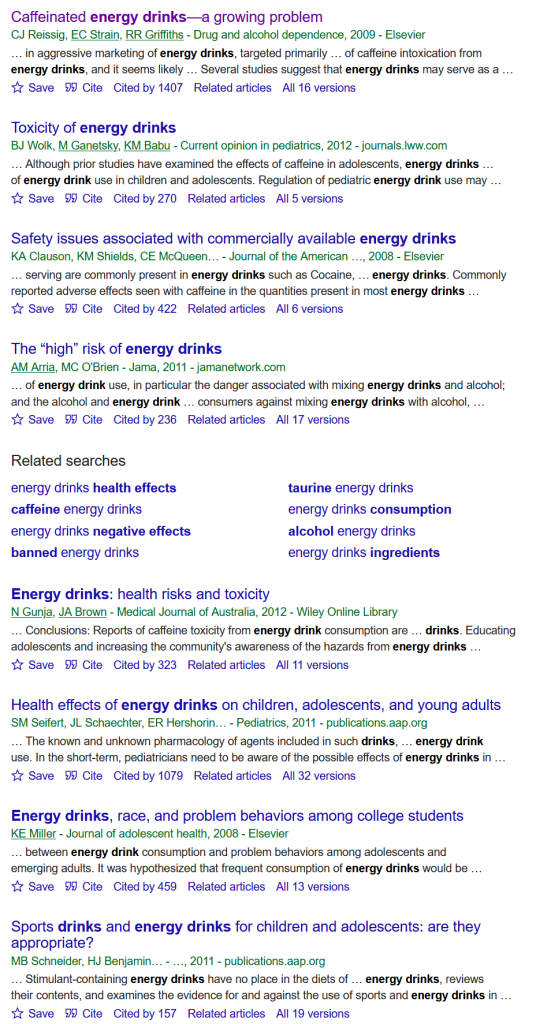
While researching the demographics data, an alarming trend began to emerge as the majority of research that is present on sources such as Google Scholar and Researchgate pose energy drinks as a negative within society and seeks to examine the negative effects on children. There is a correlation between people consuming energy drinks and obesity that my brand will try and avoid.
How is this information useful?
When the brand undergoes development in the second phase of the major project, the branding and products would avoid the trappings of the market leaders and be focused on a more mature demographic that are health conscious.
Bibliography
British Soft Drinks Association, 2018. Code of practice on energy drinks. [Online]
Available at: https://www.britishsoftdrinks.com/write/MediaUploads/Energy%20Drinks/Energy_Drinks_Code_of_Practice_August_2018.pdf
[Accessed 03 12 2022].
Clapp, O., Morgan, M. Z. & Fairchild, R. M., 2019. The top five selling UK energy drinks: implications for. British Dental Journal, 226(7), p. 493.
Department of Health and Social Care, 2018. Ending the sale of energy drinks to children. [Online]
Available at: https://www.gov.uk/government/consultations/ending-the-sale-of-energy-drinks-to-children
[Accessed 06 12 2022].
Google Scholar, 2022. Google Scholar search. [Online]
Available at: https://scholar.google.com/scholar?hl=en&as_sdt=0%2C5&q=energy+drinks&btnG=
[Accessed 06 12 2022].
Rockstar Energy, 2022. Rockstar Energy. [Online]
Available at: https://www.rockstarenergy.co.uk/
[Accessed 06 12 2022].