Layering and separation is a very important facet of design. We are typically constrained to two dimensions and it is vital to ensure that any information presented within this space is clear and well defined. Tufte argues that “What matters inevitably, unrelentingly is the proper relationship among information layers. These visual relationships must be in relevant proportion and in harmony to the substance of the ideas, evidence, and data conveyed” (Tufte, 1994).
The written form itself is divided into various layers, in the majority of narratives it is typical that a book will be split into Acts and Chapters. This system of layering typically denotes a turning point within a story. “The true three act structure isn’t a formula, it keeps your beginning separate from your middle and your middle separate from your end.” (Maio, 2019)
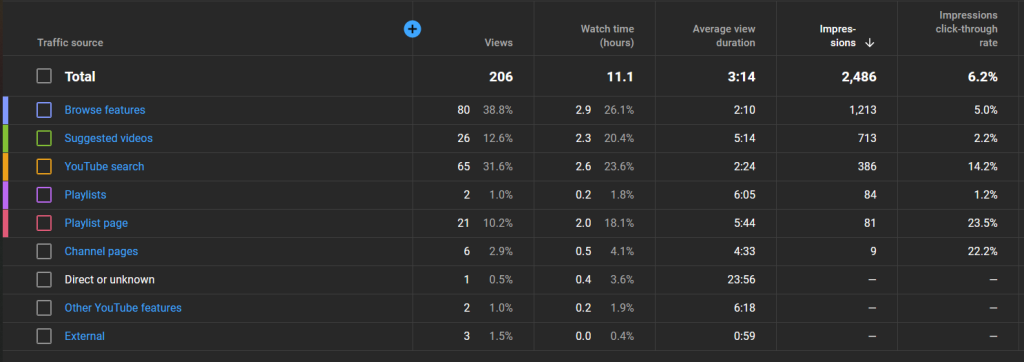
Content hosting platforms such as Youtube utilise analytical tools to help creators interpret how their content is engaged by viewers. In the following example I have taken data points from one of my most popular videos on Youtube and this provides information as to how people have found it. The line chart is broken into a colour keyed system reinforcing the concept of color and information serving a useful purpose in information interpretation.

Platforms that host content such as Spotify, Apple music and Audible all use genre to layer and separate content. This expedites the process of finding a subject of interest quickly and efficiently without knowing the name of a single performer or artist. “The concept of genre is a valid one. We need a method for sorting out and defining varieties of narrative fiction, and genre gives us a tool to begin the job” (Guin, 2005).
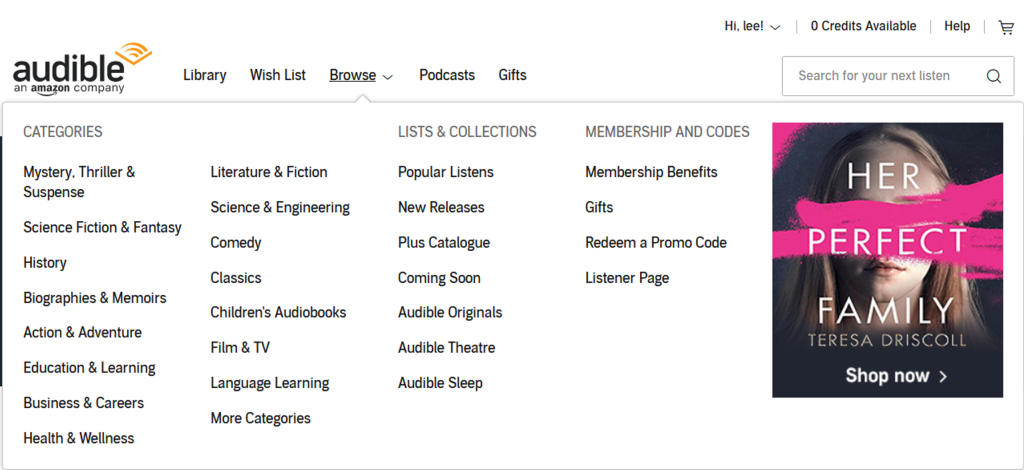
Audible. (2021) [Online]. Available at :https://www.audible.co.uk/ [Accessed 14 Nov. 2021].
Tufte, E (1994). Envisioning Information. Connecticut: Graphics Press.
Guin, E, (2005)“Genre: A Word Only a Frenchman Could Love” Public Libraries 44, no. 1 (Jan./Feb. 2005): 21.
Maio, A. (2019). What is The Three Act Structure? No Formulas Necessary. Available: https://www.studiobinder.com/blog/three-act-structure/. Last accessed 14/11/2021.
YouTube. (2021) [online] Available at: https://studio.youtube.com [Accessed 14 Nov. 2021].